


Transcript:
Hello everybody! It’s Roz here, with glamorous assistant Stephanie.
And also the wonderful wonderful Tracey Dockree who’s the head of Ethical Rebel! And I’m really, really, really pleased and excited that she’s agreed to come on live. And there’s a reason why I wanted her to come on live and that is is because she has created an absolutely amazing magazine all about plastics, pollution, sustainable fashion and what she wants to do is to take it into schools and colleges all around the country, which is absolutely incredible. So I’m going to post the link to her crowdfunder so you can go and have a look. But first of all, what we’re going to do, I’m going to put you on speaker view so it’ll be you talking, not not just me.
1:06 Introduce yourself, please, Tracey
1:09 Hello! Thank you for that lovely introduction. Okay, so I’m Tracey Dockree. I did a fashion degree, I don’t know how long ago – maybe 10 years ago. Hey, so I’m sorry, that’s me – feedback!
1:31 So while I was doing the fashion design degree, I discovered all these issues with pollution. You know, dumping dyes in waterways and chemical contamination. Slavery, as well, was another thing that kept coming up and these are things I just didn’t think could possibly be happening, you know. In the UK we’re used to having certain laws about how to conduct business, so I just assumed those rules applied universally and obviously they don’t.
2:13 And it’s something that more and more we’re all finding out about. I think you have to be living under a rock not to be aware of it now. But one of the big things, is that the issues are so huge and so complex that people have difficulty, I think, latching onto specifics so that they can take action.
2:42 So, we all know that plastic’s bad so we do what we can to recycle plastic or reduce it but we don’t always fully understand the full story about plastics. So the magazine goes into why plastics contribute to climate change, contribute to pollution, the plastics we have in our clothes.
3:08 And i think for me, for a lot of people, that’s kind of the biggest shocker because I don’t think a lot of us realize just how much plastic we have in our clothes.
3:17 No, I mean, if I’d just interrupt you briefly there, I would have no idea really about that at all. Other than, I mean, obviously I’ve got my land raver t-shirt on here and obviously that’s going to be some kind of plasticky kind of motif and all the rest of it. But if I was just buying, you know, like a cotton shirt or a top or something like that, has that got plastic in it?
3:49 Cotton doesn’t but the buttons might. Depends on what they’re made from. If it’s a poly cotton, polyester is plastic and quite a lot of cotton shirts now tend to be poly cotton mix, so it’s always worth looking at the label to see what exactly – I’m going to say the ingredients! – the fibers are that the clothes are made from.
4:16 And one of the things that we’ve done in the magazines is 10 of the most popular – that’s perhaps not quite the right word – but the 10 biggest plastic fabrics to look out for, so you know to avoid them. Or how best to go for a more sustainable or eco-friendly option.
4:47 Such an interesting subject isn’t it and I think, you know, we’ve touched on it with a few different questions in the group as well. It’s like plastics in the ocean. Obviously it’s a huge great big thing and I see these things where, you know, you get these videos that you see on facebook or wherever and it’s like loads of trash, just floating around in in the sea and all the rest of it.
5:19 How did someone put it there? Someone puts it there. That’s one of the things that I think about is, you know, and who’s putting it there? It’s not a direct result of say, like clothing production is it?
5:35 An element of it is microplastics because … so things like acrylics … [break down into] pieces when you wash them – microplastics – they shed thousands and thousands of microplastics in each wash. And they do go into the sea and it’s those small microplastics that have become plastic soap in certain areas that it’s just condensed areas of plastic soup.
6:08 Micro plastics, so creatures, sea creatures, fishes, they feed on the small – it shouldn’t be microplastics, it’s supposed to be whatever natural thing it is that they feed on. It’s that size, but instead they end up feeding on microplastics, and that’s how it’s getting into our food chain. As well, so they estimate, most of those probably eating or are consuming microplastics.
6:39 Yeah, that’s really interesting because a lot of what we see are like plastic bottles and rubbish like floating around in the sea. But what we’re not seeing obviously are all the micro plastics. Is it like the, is it like plankton, and things that are…
6:53 Yeah, yeah and there’s things from forever chemicals as well which wash from our clothes, which are quite harmful and they do not dissolve. They do not go away. And they found these chemicals in the arctic in polar bears. They reckon that 99% of animal life and population have consumed these chemicals, which are not good. Damaging. It’s a really, really massive concern
7:26 Mm, it’s a really, really massive concern isn’t it? It really, really is. So, your magazine … how, how is… Tell us, tell us about your magazine and, obviously, you can share your screen as well, if you want to, to show us anything from it and then just talk to us a little bit about why. Why, because you, you’ve written a lot of it, if not all of it, am I right? I’ve written most of it.
7:48 So just, yeah, tell us a little bit about the magazine and then what was the inspiration to actually put it into a publication.
7:57 A few years ago, I had the opportunity to do a photoshoot with some students to create a magazine and they chose the topics they wanted to do – slavery, plastics and pollution, and textile waste. We did the photoshoot – and this is all just before Covid. And then we put out … I started creating the magazine and I’ve, I kind of wanted it to be like a comprehensive or holistic view of that particular topic and I got halfway through the section on plastics and pollution and realized that this thing was massive. You know, I was getting to 100 pages. So the best thing to do, was to just break it down into even smaller sections. So last year we put out the slavery magazine, which is currently on sale. And this year, this launch, we’re doing the plastics and pollution magazine. The plastics and pollution magazine is still 100 pages. It is, it’s just such a huge topic, partly because you can’t really talk about plastics and pollution without including a little bit about climate change and water scarcity and the other things that impact our environment.
9:18 So yeah, that’s kind of how it came about. Very slowly, because I’ve been collecting and researching all the information as I go and because the information changes, because there’s new research coming up all the time. So I’m constantly having to go back and change it and update it.
9:36 That’s like more than a full-time job really, isn’t it?
9:39 Pretty much! Yes it has been. Yes, I know. And yeah, I’m doing it all off my own back, as well, really. So yeah.
9:48 No, I think what what you’ve done is just so admirable, alongside running a, you know, like sort of tailoring alterations like, because that’s what you do isn’t it? This is, this is where you come from, it’s what you do. And you are a designer as well.
10:04 I do commissions, designs and I get, I get a lot of requests now for repairs and alterations. People are really getting into wanting to extend the life of their clothes, which is brilliant. I enjoy doing that.
10:17 So, yeah, so the crowdfunder then, that you’ve set up, that’s already busted its target, hasn’t it?
10:26 Yes. Yes, I’m delighted because that means we can print. We can … we’ve raised enough to do a minimum print run. Yes, so we can actually print it. So now it’s a case of raising as much as we can to … so we can get as many copies as we can into different student libraries because I feel that, rather than just selling it for the sake of selling it, it’s more sustainable for it to be in the library where it can be left out for students.
10:57 Yeah, I mean, obviously you know, we speak a lot so the whole idea about it being available in, you know, schools and colleges and universities all around, it’s a wonderful, wonderful document, if you like, to be able to have there for, for the students to read up all about it as well and become informed. Because I still think that there’s so much ignorance around.
11:29 Yeah. I mean, when we did, when I was working with the students before, I mean a lot of them were clued in but there were a lot of them that weren’t. And a lot of … I know I have teenage – well, they’re actually a bit older than teenage now – kids and you know the only reason they’re aware of any of it is because I talk about it. It’s, it’s not something that’s on their radar every day. Yeah no, with most young people, it’s just not, it’s just not what they see.
12:00 No and it’s something that can just be very easily pushed under the carpet, as well, isn’t it? You know, to deal with it on a later day but, you know, you’ve done a lot of research into it and then put it into a, into a magazine format, which is absolutely brilliant. So I have put the link, everybody, I have put the link in the comments for you so that you can get a copy of the magazine which, in actual fact, you can get a digital copy for five pounds, which is just like incredible. And then it’s 10 pounds for … to donate a copy to go into a school somewhere and that’s, that i think, that’s what needs to happen. So, this is the second magazine that you’ve done. Where do you see it going from here?
12:53 Well, once I’ve kind of done this one, we’ve got the next one, which would be textile waste. Which, I guess, the way the rates of, my writing rate, would probably mean it will be put out there next year. Maybe, next year, hopefully. After that, I think, I think what I would probably do, would focus more on putting the information out on the ethical rebel website rather than doing a magazine. There’s a plan, though, as well, to combine those three magazines into a book. So, potentially, you’ve got a manual, then, of all the different things, all the different issues in the fashion industry and the things to look out for. Hopefully in a format that’s easy to understand and they can just literally flick to the bit they need as and when they need it.
13:49 Yeah, and then Ethical Rebel will then become kind of a new site, a blog and also, because what one of the things we do is, we have a ethical fashion directory, so it’s going to be pointing, signposting people in the direction where they can buy from brands that aren’t actually doing …. contributing to improving the environment rather than damaging it, if you like, and improving people’s lives rather than looking to use people’s lives.
14:26 Yeah, for sure, so I know that the directory that you’ve got on the Ethical Rebel website is great because you’re bringing together a lot of like-minded sustainable fashion businesses and then highlighting them all in one place, isn’t it and so this is definitely, we’ve got sustainable fashion people in this group, so we will put the link, probably afterwards now, into the, into the comments, just about going to have, if you’ve got a sustainable fashion brand, to go and list it on Tracey’s website. Definitely. So, when does the crowdfunder finish?
15:06 Tuesday at 11 o’clock in the morning. So that’s five days, I think, yeah five days.
15:13 Yeah, so definitely, definitely, definitely you need to go and have a look at the link I’ve put in the comments and for five pounds – who doesn’t have five pounds? And that means that, you know, if we can really, really push this. Because I think it’s really lovely that you’ve found all of this and then actually taken the time to properly research and then put it into written format that can be shared with others. Because it’s, it’s too easy just to, sort of like, you know, go around and blab that, oh yeah, well you know, this problem, this problem – but without actually doing the research and something that, that people can actually study and read. Which is, I think, it’s, I think, it’s absolutely brilliant what you’ve done and I know you’ve done it in your spare time whilst you’re sitting there with your, I can just imagine, like sitting there with your sewing needle and scissors and things and like, making, you know, things that fit people, fit people nicely. You’re the perfect person to have done it. It’s like it’s your calling.
16:20 Yeah, it does feel that way. It is, I don’t know, I mean I think I couldn’t do my business if I didn’t, if it wasn’t purpose-driven, if that makes sense. I can’t do it just for money. I’m not, I’m not motivated by money. I need it, you know, to support myself but other than that, I need to have a bigger purpose, yeah. Yeah and this works for me
16:45 Yeah, I know. No, I relate to that very, very much as, you know, instead of just like, you know, selling all the mannequins out and making money that way. But actually no, I’m in a position that I can have a a bigger purpose, you know. And it doesn’t have to be, obviously, it doesn’t have to be mannequins, it could be any kind of product. But this, it could like follow the same, just follow the same principles. And I think that’s what’s coming together in the group, it’s people who have got that it’s, like, here, here in the heart, you know, to be able to … you know, at the end of the day we’ve all got to make a living as well, so that’s why, you know, that’s why I called it ‘Create Your Sustainable Business.’ So, it’s, it’s very, very interesting.
17:29 Right. Okay. Well, thank you so much for that. All right, go and check out the links in the comments. We will also put the link in for the ethical rebel directory as well. You definitely need to get yourself in there, that’s for sure. And yeah, thank you very much everybody.
17:52 Thank you.
17:56 Right, hang on a minute. Stop live stream. There we go. Thanks everyone for watching!
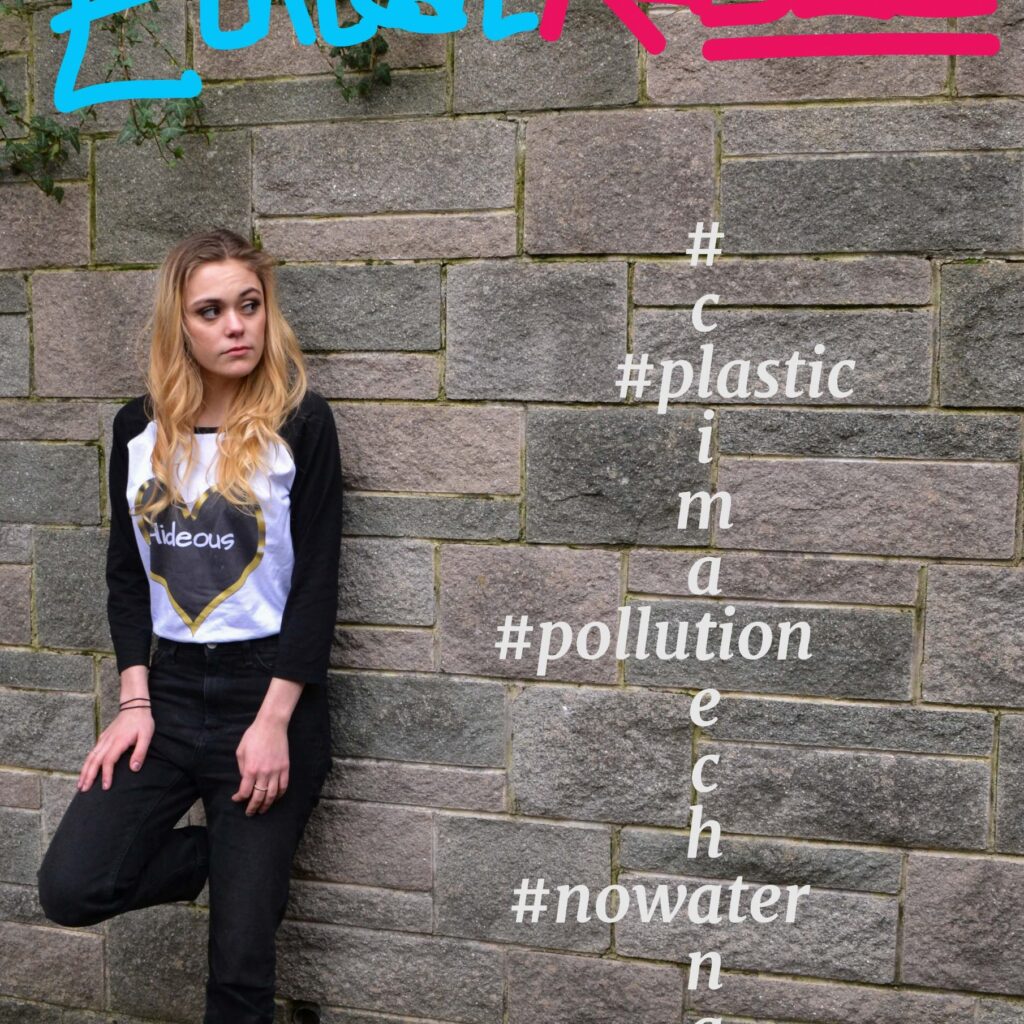
Ethical Rebel Zines


More from Ethical Rebel
-

Upcycling v Recycling
Upcycling v Recycling – upcycling adds value to a product through design or craftsmanship whereas recycling is a degrading process.
-

What is Circular Fashion?
Circular Fashion garments and materials stay in circulation through re-use, repair, resale, revamping, upcycling, repurpose and recycling
-

Social Enterprise Day
20 November is Social Enterprise Day so we’re just taking a moment to share some of our T-shirts and the amazing charities we support from the profits
-

Shop Secondhand Clothing
Did you know that extending the life of a garment by an extra nine months could also lead to a 20-30% reduction in Carbon, waste and water usage?

