


Plastic Free July is a global campaign encouraging individuals and communities to reduce plastic waste. Over 100 million people in 190 countries get involved in the Plastic Free Challenge each year. The key is to become more aware of any plastics you use, particularly single-use plastics, and look for sustainable alternatives.
Why is Plastic Free July Important?
Plastic pollution is still one of the most pressing environmental issues we face today. It has a devastating impact on wildlife, waterways and ecosystems. Single-use plastics, used only once before being discarded, are the biggest contributor to this problem. They often end up in landfills or, worse, in oceans, where they can harm marine life and enter the food chain.
The Plastic Free July website is full of resources and ideas to make small but impactful changes in our daily lives. Whether it’s refusing a plastic straw, bringing a reusable bag to the grocery store, or choosing products with less packaging, every action counts!
How Can You Take Part?
To take part in Plastic Free July, follow the easy steps below:
- Take the Challenge: Commit to reducing your use of single-use plastics for the month of July. Visit the official Plastic Free July website to take their quiz and find their Plastic Free July Calendar and Challenge Choices (images below). I also recommend checking out their video page for films about the impact of plastic
- Assess Your Plastic Use: Identify the single-use plastics you commonly use and find sustainable alternatives.
- Spread the Word: Share the challenge and your progress with friends, family and on social media to inspire others to get involved.
- Continue Beyond July: Keep going after July finishes! This is not just about undertaking a one-month challenge, but creating long-lasting habits that contribute to a healthier planet. Continue the new habits you’ve started and explore more ways to reduce your plastic footprint.
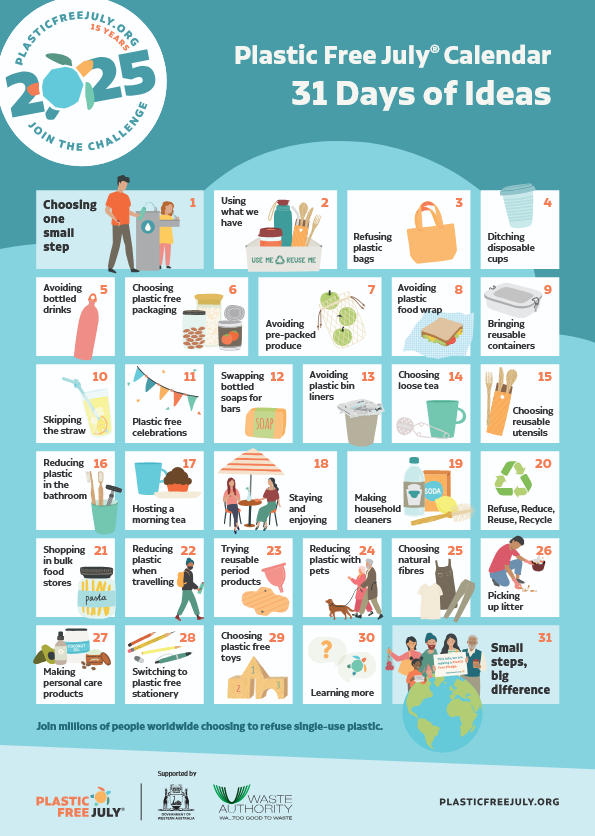
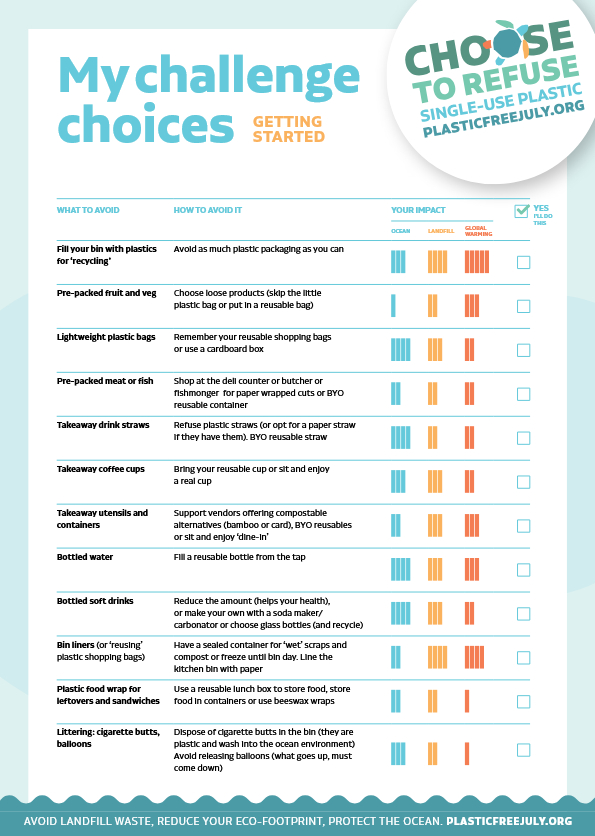
Join the Movement
Plastic Free July is more than just a month-long event; it’s a catalyst for long-term change. By choosing to refuse single-use plastics, you become part of a global community dedicated to preserving our planet for future generations.
To learn more about how you can make a difference, watch the video below to take the first step towards a plastic-free lifestyle.
Success Stories and Community Impact
Over the past fifteen years, Plastic Free July has led to individuals and organizations making significant changes. Many businesses now have plastic-free policies, schools educate students on sustainability, charging for plastic bags to reduce use has become law in a number of countries, healthcare institutions are rethinking their use of plastics, looking for ways to minimize waste without compromising patient care – the ripple effect of this campaign continues to grow.
Together, we can create a cleaner, more sustainable world – one plastic free step at a time.
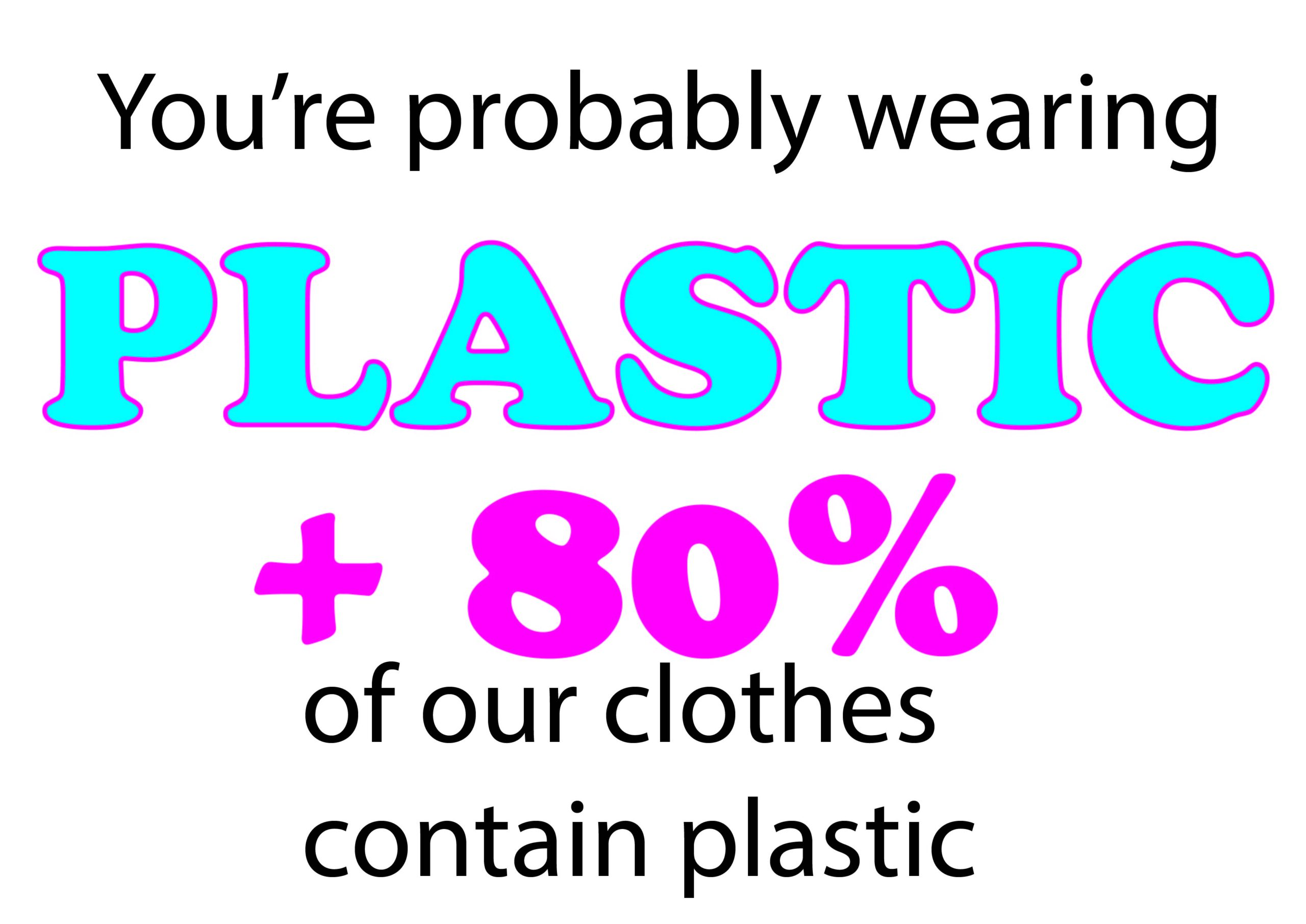
Are You Wearing Plastic?
As a fashion designer, I am especially concerned about the impact of the plastic in our clothes. The list of plastics used to make our clothes includes polyester, nylon, elastane (aka spandex), acrylic and viscose. These make up over 80% of the clothes we wear.
Below is a quick video about the different types of plastic fashion and their impact. I created this video on request for students at Cornwall College using excerpts from our Plastics and Pollution Magazine
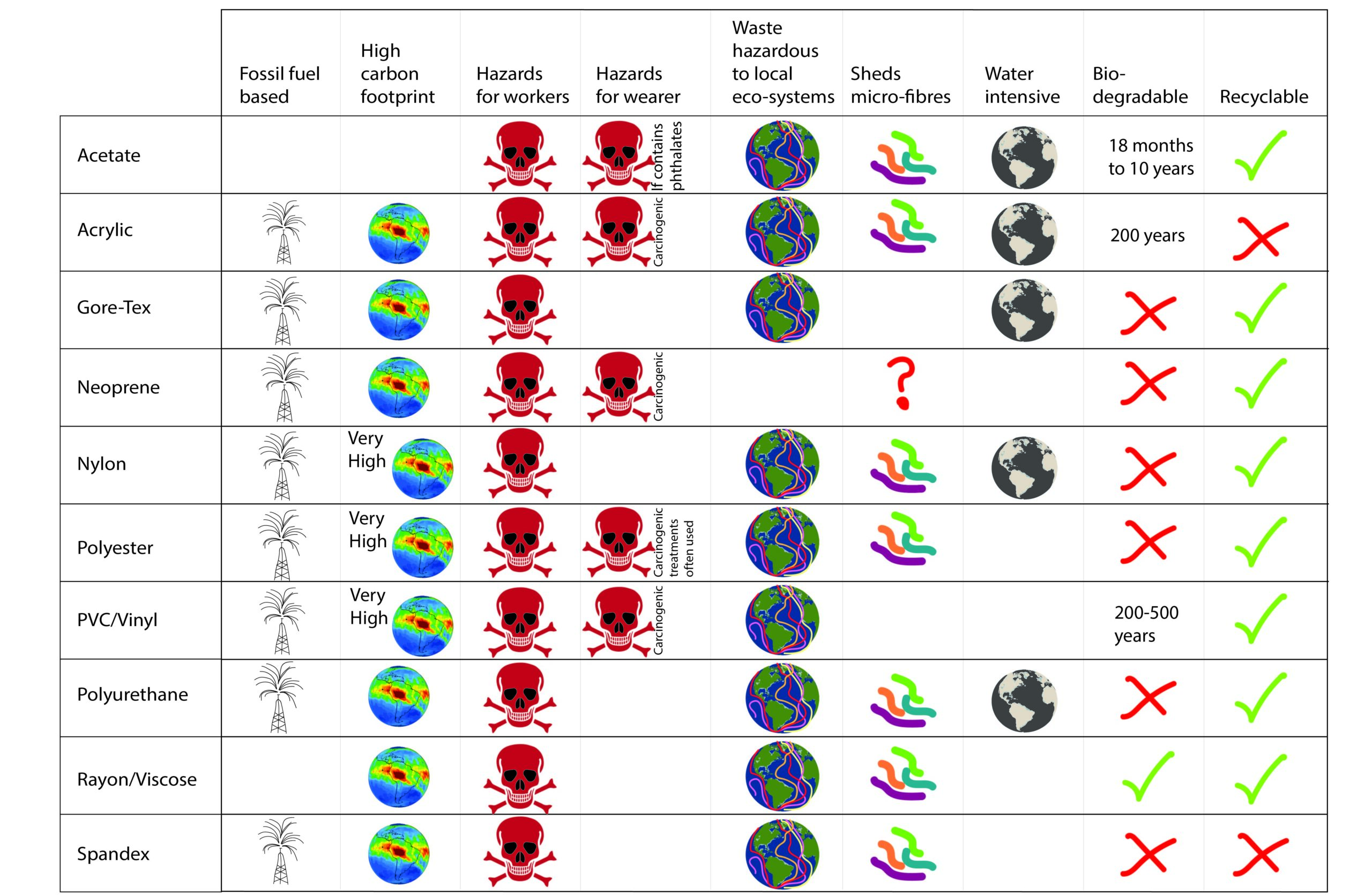
If you would like to find out more, we have a handful of copies of the Zine left:
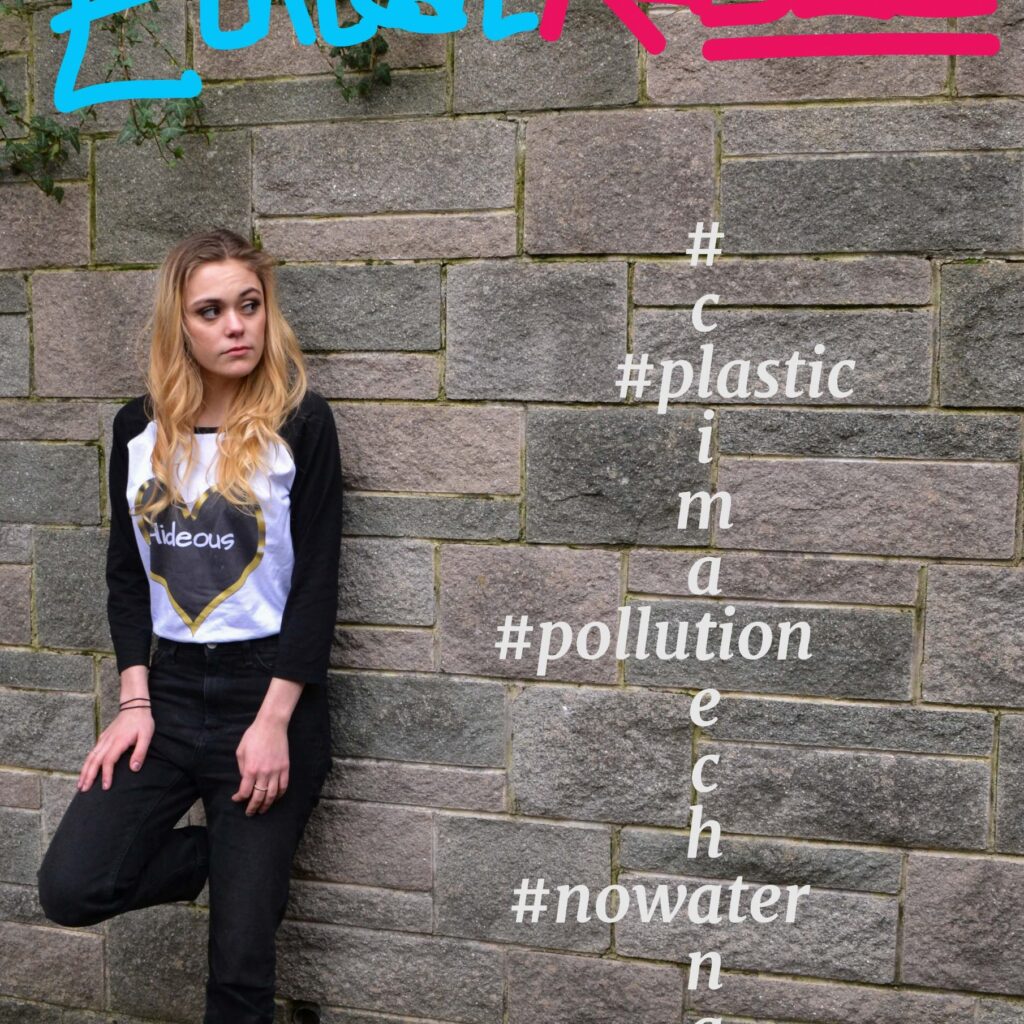
Plastics and Pollution Magazine
Plastics and Pollution Magazine comprises 96 pages and focuses on the toxic footprint of our clothes. How do they impact climate change, water scarcity and pollution? How much plastic is really in our clothes?
In stock
How can we clean up what’s already out there?
Every time you pick up a bit of litter from the street, you stop it from being washed away and entering our waterways. Most litter you see on the street is plastic.
2-minute clean ups are a particularly effective way to clean up plastic. They can be done at any time and as often as you can manage. You could do a 2-minute clean up in your neighborhood, local park, beach, school, downtown or outside your workplace.
You can also join organised Clean Up events, like Surfer Against Sewage‘s Big Beach Clean, or set up one of your own with some friends.
Sea Monster Project
A Story In T-Shirts is a social enterprise donating 50% of profits to charities. The Sea Monster Project comprises of Sea Monster designs which help raise funds to clean the oceans of an even bigger sea monster – plastic.
50% of profit from our t-shirts and other goodies goes to these Charities Cleaning Plastic from our Oceans


We give 50% of profit from the T-Shirts and other goodies below to charities cleaning plastic from our oceans :
-

Octopus t-shirt | Kraken t-shirt
£30.00 -

Ladies Octopus t-shirt | Kraken t-shirt
£30.00 -

Ghost Kraken t-shirt | Grey Octopus t-shirt
£30.00 -

Black Octopus on white t-shirt
£30.00 -

Kraken Tall Ship t-shirt – ocean blue
£30.00 -

Kraken Tall Ship t-shirt – black
£30.00 -

Kraken Tall Ship t-shirt white
£30.00 -

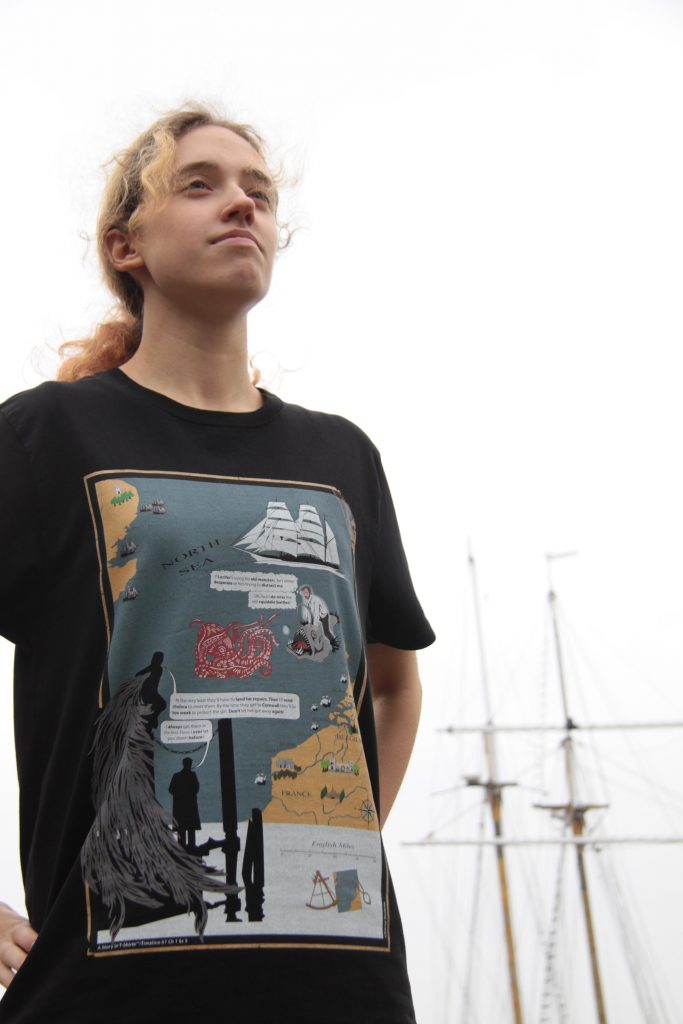
Timeline 67 Sea Monsters and Tall Ships t-shirt
£30.00 -

Octopus Bag | Kraken Bag
£20.00 -

Sea Monster Project tote bag
£20.00 -

Sea Monster Project Coaster – aquamarine
£4.50 -

Sea Monster Project Coaster – turquoise
£4.50 -

Angler Fish Coaster
£4.50 -

Red Octopus Coaster | Kraken Coaster
£4.50 -
Ladies Kraken Tall Ship tshirt black – sample
Original price was: £30.00.£15.00Current price is: £15.00. -
Ladies Angler fish tshirt grey
Original price was: £30.00.£25.00Current price is: £25.00. -
Kraken Tall Ship t-shirt denim blue – misprints
Original price was: £30.00.£15.00Current price is: £15.00. -
Timeline 67 North Sea Map Sample TShirt
Original price was: £100.00.£65.00Current price is: £65.00. -

Ladies Kraken Tall Ship tshirt white
£30.00 -

Ladies Kraken Tall Ship t-shirt black rolled sleeves
£30.00 -

Sea Monster Project t-shirt – aquamarine
£30.00 -

Sea Monster Project t-shirt turquoise
£30.00 -

Octopus | Kraken black t-shirt
£30.00 -

Angler fish t-shirt
£30.00 -

Squiddie the kraken postcard on black
£1.50 -

Squiddie the Kraken postcard
£1.50 -

Set of 8 postcards
£10.00 -

North Sea Map Postcard
£1.50 -

Set of 10 Timeline 67 Chapter 1 stickers
£28.00 -

Squiddie sticker
£2.50 -

Timeline 67 North Sea Map sticker
£3.50 -

Timeline 67 Chapter 1 Scene 5 Gallery Art Print
£75.00 -

Sea Monster Project mug – aquamarine
£15.00 -

Sea Monster Project mug – turquiose
£15.00


Our Plastic Free Policy
At traceydockree.com we endeavour to eliminate all single-use plastics from our operations. We only source from suppliers who are also committed to being plastic free. If any plastic does manage to sneak into our business or home, we will re-use it where possible then recycle it. We also give feedback on ways plastic can be eliminated.


